


From Town Hall to Sentencing: Sussex County's Long Road After the Millville Fire Company Incident
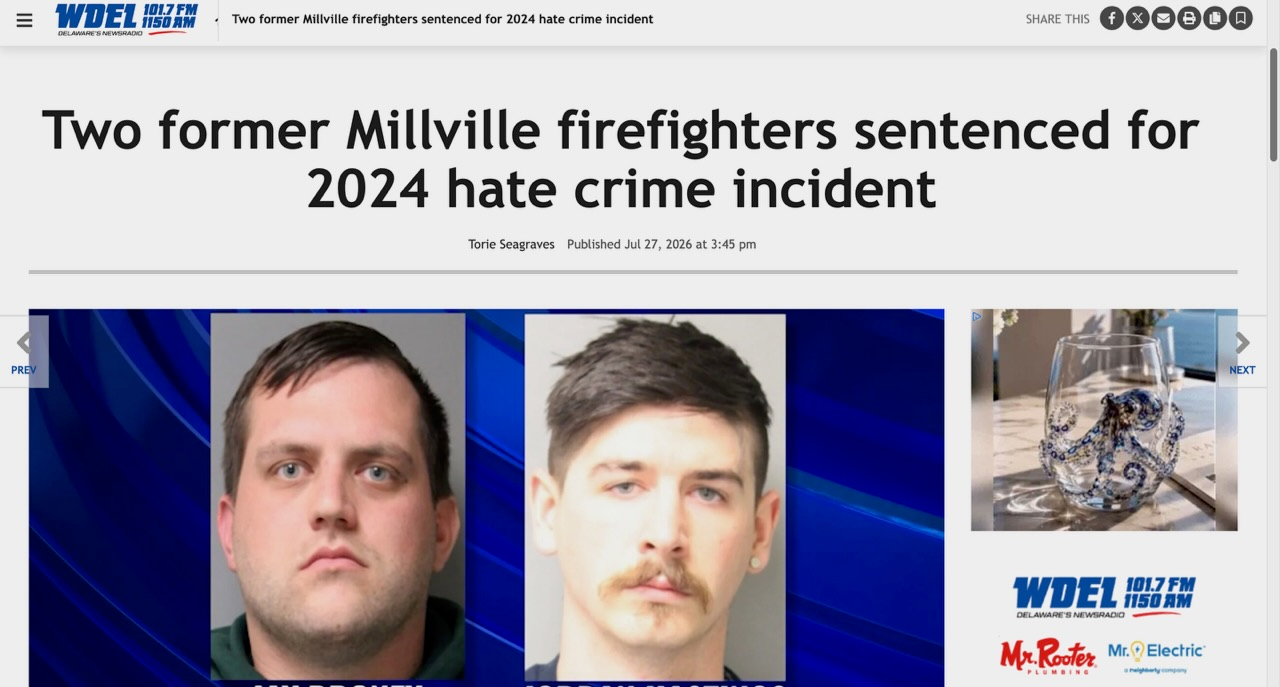
More than two years after a Black volunteer firefighter was chased with a noose at the Millville Volunteer Fire Company, the case has finally reached its legal conclusion. Jay Droney was sentenced on July 27, 2026, to one year of Level 3 probation on each of two harassment counts, plus community service, and is barred from contacting the victim or the fire company. His co-defendant, Jordan Hastings, had already resolved his case months earlier by pleading guilty to third-degree conspiracy and harassment. Both men were originally charged with felony hate crimes by Delaware State Police after the February 2024 incident came to light in April of that year, and both had their fire company memberships permanently revoked within a day of the allegations surfacing.
The sentencing closes a chapter that began well before the courtroom, in community rooms across Sussex County. In May 2025, the Southern Delaware Alliance for Racial Justice (SDARJ) held a town hall at the Lewes Library titled “Stopping Racist Hate Incidents Against Black People in Our Community,” organized specifically in response to the Millville incident and other hate incidents in the county. The event brought together Millville Fire Department president Greg Hocker, who affirmed the department’s zero-tolerance policy on hate incidents; Sussex County NAACP president Kirk Bacon; Delaware Division of Civil Rights hate crimes specialist Jennifer Kutney; a trauma specialist addressing the psychological toll of these incidents; and a representative from Speak Out Against Hate, which was preparing to launch a new anti-hate campaign in the county.
That town hall wasn’t just a response to the case, it was part of what pushed institutional change. According to WDEL’s reporting, the Millville Volunteer Fire Company used the fallout to overhaul its internal policies, adding anti-harassment and anti-discrimination training, sexual harassment training, and giving its board greater authority to act quickly on serious misconduct. Fire company leadership’s participation in SDARJ’s community forum reflects a rare instance where public accountability pressure and internal reform moved in tandem with the criminal process.
The final sentences, probation and community service rather than prison time, will likely reignite the debate SDARJ raised at its town hall about whether consequences for hate crimes match their impact. But the broader story here is really about what a small community did while the courts worked: it organized, educated, and pushed an institution to change before the gavel ever came down.