

Response to the Voting Rights Act Ruling: How America Is Reacting to Louisiana v. Callais
Updated: May 22, 2026 | Read time: 14:38
This article is a follow up on the recent Supreme Court ruling and reflects on how America is reacting to Louisiana v. Callais. Related articles: The Ballot Box Under Attack — and How Delaware Is Pushing Back | The Voting Rights Act After Louisiana v. Callais
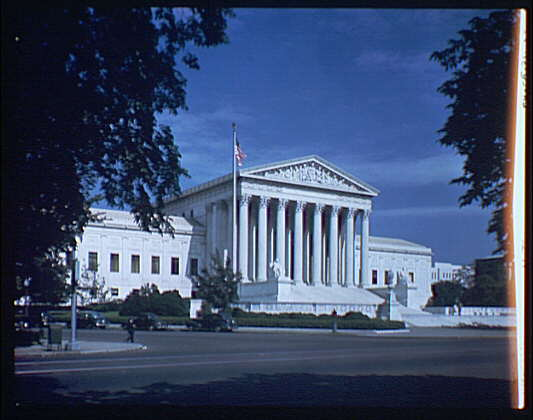
The Supreme Court’s April 29, 2026 decision in Louisiana v. Callais has set off one of the most consequential redistricting crises in American history. In a 6-3 ruling along ideological lines, the conservative majority effectively dismantled Section 2 of the Voting Rights Act (VRA) — the last major federal mechanism protecting voters of color from racial discrimination in redistricting. Nearly four weeks on, the response to the Voting Rights Act ruling continues to accelerate: Louisiana’s legislature is finalizing a new map that would eliminate its only majority-Black district held by a Democrat, the Supreme Court has vacated redistricting rulings in Mississippi and North Dakota, lawsuits are proliferating across at least a dozen states, and a landmark NPR analysis has found that the ruling now threatens minority voting power in at least 17 state and local governments. Underlying it all is reporting by The Guardian revealing that the majority opinion’s central factual premise was built on misleading statistics supplied by the Department of Justice.
Here is a comprehensive and continuously updated look at what the Court decided, why the data behind it is disputed, and how advocates, lawmakers, courts, and communities across America are responding.
What the Court Decided — and What It Means
The case originated in Louisiana, where years of litigation had established that the state’s original congressional map diluted the political power of Black voters, who make up roughly one-third of the state’s population. After federal courts ruled the original map likely violated Section 2 of the VRA, Louisiana redrew its districts to include a second majority-Black congressional district — a map under which two Black Louisianans were elected to Congress for the first time in the state’s history.
A group of self-described “non-African-American voters” then challenged that remedial map as an unconstitutional racial gerrymander. The Supreme Court sided with them.
Writing for the majority, Justice Samuel Alito argued that the Constitution “almost never permits” racial distinctions in mapmaking and that Louisiana lacked a compelling interest to justify its race-conscious district lines. The Court imposed new evidentiary hurdles on plaintiffs challenging discriminatory maps — and crucially, established that states can now defend against virtually any racial discrimination claim simply by arguing their intent was partisan rather than racial. Since Black voters support Democratic candidates at rates exceeding 90% in Southern states, legal experts note, this effectively allows Republican-controlled legislatures to harm Black voters simply by claiming partisan motivation.
Stanford Law professor Pamela Karlan, at a May 4 event hosted by the American Constitution Society, put it plainly: “If a state says ‘We want to have a partisan gerrymander,’ then you can’t come in and say, ‘But that’s unfair to minority voters.'” She added that Justice Alito was “just plain lying” when he claimed the Court only interpreted — rather than nullified — Section 2.
The Campaign Legal Center described the ruling as “one of the most consequential setbacks for our multiracial democracy in a generation.” Justice Elena Kagan stated in dissent that the decision renders Section 2 “all but a dead letter,” and invoked the full weight of Alito’s approach: “It avails itself again of the tools used before to dismantle the Act: untenable readings of statutory text, made-up and impossible-to-meet evidentiary requirements, disregard for precedent, and disdain for congressional judgment.”
The Library of Congress’s Congressional Research Service has confirmed that if Congress seeks to respond to Callais within the bounds of the Constitution, it could enact race-neutral standards for congressional redistricting — but such action faces long odds in the current Senate.
The Misleading DOJ Data at the Heart of the Ruling
A critical part of the response to the Voting Rights Act ruling has focused on the statistical foundation Justice Alito used to justify it — and what investigative reporting by The Guardian has revealed about its reliability.
Central to Alito’s argument was the claim that systemic racial discrimination in voting no longer justifies the VRA’s protections. As evidence, he wrote that “Black voters now participate in elections at similar rates as the rest of the electorate, even turning out at higher rates than white voters in two of the five most recent Presidential elections nationwide and in Louisiana.” As The New Republic reported, this claim was drawn almost verbatim from an amicus brief filed by the Trump administration’s Department of Justice.
But election experts say the methodology behind those numbers is fundamentally flawed — and potentially deliberately so. The DOJ brief calculated Black and white voter turnout as a proportion of the total voting-age population — a method widely considered unreliable because it includes ineligible voters in the denominator, artificially inflating apparent turnout rates for communities with higher concentrations of ineligible residents.
The preferred standard in the field uses citizen voting-age population (CVAP). When The Guardian applied this widely-accepted methodology to Louisiana’s actual data, the results were starkly different: Black voter turnout in Louisiana exceeded white voter turnout in only a single recent election — the 2012 presidential race when Barack Obama was on the ballot.
University of Florida professor Michael McDonald was unequivocal: “They had to fudge how they’re calculating the turnout rate to get there. Someone knew what they were doing.” Georgetown professor Christopher Warshaw agreed, saying the majority was “cherry picking a particular year, cherry picking a particular method.”
The implication hangs over everything that has followed: the most consequential ruling on minority voting rights in decades may rest on a statistical foundation that expert consensus says was manipulated.
The Supreme Court Keeps Escalating
The response to the Voting Rights Act ruling from the Court itself has been just as alarming to voting rights advocates as the ruling itself, as the conservative majority continues to move with unusual speed to cement and extend its impact.
On May 4, the Court bypassed its standard 32-day waiting period to immediately finalize the Callais judgment — coming just days after Governor Jeff Landry had already suspended Louisiana’s May 16 primary. By that point, more than 100,000 Louisiana voters had already cast early ballots, and 42,000 absentee ballots had been submitted. Justice Ketanji Brown Jackson, the lone dissenter, wrote that the ruling “has spawned chaos in the State of Louisiana” and that the Court’s action was “tantamount to an approval of Louisiana’s rush to pause the ongoing election.”
On May 11, in an unsigned, unexplained 6-3 order, the justices vacated a lower court ruling that had found Alabama’s 2023 congressional map to be both an illegal racial gerrymander and an unconstitutional act of intentional discrimination under the 14th Amendment — sending it back to the lower court with Alabama’s May 19 primary just days away. Justice Sonia Sotomayor argued in dissent that the intentional discrimination finding was “independent of, and unaffected by, any of the legal issues discussed in Callais,” making the vacatur inappropriate and election-disrupting.
On May 18, the Court vacated redistricting rulings in Mississippi and North Dakota and remanded them for reconsideration in light of Callais. In Mississippi, a lower court had ordered three new majority-Black state legislative districts created in 2025. In North Dakota, the Turtle Mountain Band of Chippewa Indians and Spirit Lake Nation had successfully challenged a legislative district map under Section 2. Both rulings are now effectively nullified pending reconsideration. The Lawyers’ Committee for Civil Rights Under Law called the Court’s action “a warning to all” that “Callais has unleashed a race to discriminate nationwide, injecting chaos into elections at every level across the country.”
Justice Jackson dissented in both Mississippi and North Dakota cases, writing that Callais did not address whether Section 2 can even be enforced by private parties — a legal question the conservative majority is carefully avoiding, but one that advocates fear could be the next shoe to drop.
The Redistricting Wave: State by State
The political response to the Voting Rights Act ruling has been breathtaking in scope, with Republican-controlled legislatures moving to aggressively redraw maps across the South even as primaries are actively underway.
Louisiana is the ground zero state. After Gov. Jeff Landry suspended the May 16 primary, the Louisiana Senate approved a new congressional map on May 15 that would eliminate Rep. Cleo Fields’ majority-Black 6th Congressional District. On May 21, a House committee advanced an updated version of the map after a ten-hour hearing in which members of the public testified overwhelmingly against it — signaling the map is on track to reach Gov. Landry’s desk imminently.
Florida moved immediately. Gov. Ron DeSantis had already called a special session before the ruling came down, and the Legislature passed HB 1-D on the very day Callais was decided — a map that could net Republicans four additional House seats. DeSantis is also now arguing the ruling invalidates a 2010 voter-approved state constitutional amendment that prohibits drawing districts to diminish minority voting power — a move that, if successful, would strip Floridians of a protection they voted for directly.
Tennessee passed a new congressional map on May 7 that dismantled the state’s only majority-Black congressional district — the Memphis-based 9th District, which has existed for nearly a century — and split Black voters across three sprawling, majority-white Republican districts. Republican lawmakers argued the map was purely partisan, claiming they drew it without awareness of Memphis’s racial demographics, a claim widely ridiculed.
Alabama called a special legislative session after the Supreme Court’s May 11 order, with Gov. Kay Ivey signing legislation authorizing special primary elections for impacted districts. The state’s May 19 primary proceeded in a state of legal limbo, with voting rights groups filing emergency motions and court orders shifting by the day.
Mississippi has taken a different approach: Gov. Tate Reeves canceled a special session for congressional redistricting, saying he saw “no need” to redraw maps — though he had previously indicated he would call a special session to redraw state Supreme Court voting districts.
Georgia: Prominent Republicans called for redistricting, though Gov. Brian Kemp said it was too late to do so in 2026. Georgia’s state Supreme Court election on May 19 is being closely watched as an indicator of whether state courts will serve as a meaningful check on future gerrymandering.
North Dakota: The Callais ruling has left a tribal redistricting case in limbo, with the Turtle Mountain Band and Spirit Lake Nation’s successful Section 2 challenge now effectively vacated pending reconsideration.
According to an analysis by Fair Fight Action and Black Voters Matter, the Callais ruling could ultimately help Republicans flip as many as 19 majority-minority seats currently held by Democrats. An NPR analysis found the gerrymandering could lead to white candidates winning 15 House seats currently represented by Black members of Congress — a level of racial revanchism not seen since the end of Reconstruction.
The Impact Goes Far Beyond Congress
A major NPR investigation published May 18 found that the response to the Voting Rights Act ruling now threatens minority voting power in at least 17 state and local governments — and that number is expected to grow. The ruling’s new intentional-discrimination standard applies not just to congressional maps but to state legislatures, county commissions, city councils, and school boards.
Lawyers in dozens of pending redistricting lawsuits are now revising their legal strategies after the Supreme Court’s reinterpretation of Section 2. As Stateline reported, many of the seats held by Black elected officials at every level of government are in “opportunity districts” created after the original Voting Rights Act — and those districts are now potentially vulnerable. Washington University law professor Travis Crum warns: “After 2030, I think we’re definitely going to see the impact of the Callais decision at the state level.”
The Brennan Center for Justice has noted that while the case before the Supreme Court involved a high-profile congressional dispute, “the greatest impact of a weakening of Section 2, or worse its wholesale elimination, will almost certainly be at the local-government level.”
Sabato’s Crystal Ball at the University of Virginia has assessed that Callais “guarantees” the redistricting fight will spill into 2027–2028, with states that opted not to redistrict in 2026 — such as Indiana on the Republican side and Maryland on the Democratic side — likely to attempt redraws in the next cycle.
A Wave of Lawsuits Pushes Back
The legal response to the Voting Rights Act ruling has been equally fast-moving and shows no signs of slowing.
Tennessee: At least three separate federal lawsuits challenge the new map. On May 11, the ACLU and ACLU of Tennessee filed suit on behalf of Memphis voters, the Black Clergy Collaborative of Memphis, the Memphis A. Philip Randolph Institute, and the Equity Alliance, alleging intentional racial discrimination and First Amendment retaliation. The Tennessee Democratic Party, Rep. Steve Cohen, and State Rep. Justin Pearson filed a separate federal lawsuit. The NAACP Tennessee State Conference filed an emergency state petition challenging the special session itself as legally improper. A federal hearing on the maps is now the next major court date, with advocates watching closely.
Alabama: Following the Supreme Court’s May 11 order, the ACLU immediately returned to the district court seeking a temporary restraining order, arguing the intentional discrimination finding — which Callais did not address — remains valid and binding.
Mississippi: The Lawyers’ Committee for Civil Rights and voting rights advocates are strategizing over how to revive their challenge to Mississippi’s state legislative maps now that the Supreme Court has vacated the lower court ruling.
Virginia: Virginia’s Democratic attorney general asked the Supreme Court to block a state high court ruling affecting a voter-approved redistricting favoring Democrats. The Virginia Supreme Court has separately ruled that the legislature did not follow proper process in attempting to amend the state constitution to allow it to redraw congressional districts.
Florida: Voting rights groups are challenging DeSantis’s new congressional map and fighting his argument that Callais invalidates the 2010 voter-approved amendment protecting minority voting districts.
Civil Rights Leaders and Communities Respond
The response to the Voting Rights Act ruling from civil rights organizations and communities nationwide has been unified in its alarm — and in its determination to fight back.
The NAACP Legal Defense Fund vowed to continue fighting “in the courts, in statehouses, in the streets and most importantly at the ballot box.” They reminded supporters: “What the Court did not do and cannot do is take away our fundamental right to vote, and it is incumbent on every American to exercise that right now more than ever.”
The Lawyers’ Committee for Civil Rights Under Law called the May 18 Mississippi and North Dakota orders “a warning” that the impact of Callais “is not limited to congressional races” — describing it as a nationwide “race to discriminate.”
Civil rights groups have also renewed calls for Congress to pass the John R. Lewis Voting Rights Advancement Act and the Freedom to Vote Act, with Senate Judiciary Committee Democrats — led by Senators Durbin and Warnock and joined by the entire Senate Democratic caucus — re-introducing the Lewis Act specifically in response to Callais. The bill, also introduced in the House by Rep. Terri Sewell (D-AL) as H.R. 14 with 218 co-sponsors, would restore preclearance requirements for states with a history of voting rights violations. Its prospects in the Republican-controlled Senate remain dim, but advocates are using the push to build political pressure.
House Minority Leader Hakeem Jeffries announced a caucus-wide briefing on “the largest voter protection effort in modern American history” and pledged that the caucus’s fight against Republican redistricting “will not slow down.”
At the community level, civil rights organizations across the South are launching rallies, trainings, and grassroots mobilizations in Missouri, Alabama, Mississippi, and Louisiana, organized by the Leadership Conference on Civil and Human Rights, NAACP, Black Voters Matter, and local coalitions. NAACP Tennessee president Gloria Sweet-Love told protesters in Nashville that the situation reminds her of “my teenage years” — before the VRA was passed in 1965. “You cannot take a majority Black city, fracture its voting power, and then tell us race has nothing to do with it,” said Tennessee state Sen. Raumesh Akbari. “Racism does not become less racist because it’s called partisan.”
What Advocates Are Doing Now
Despite the scale of the setback, the response to the Voting Rights Act ruling from voting rights advocates has been to organize rather than despair — and to pursue every available legal and political avenue simultaneously.
In the courts: The ACLU, NAACP LDF, Lawyers’ Committee, Campaign Legal Center, and Democracy Docket are actively litigating challenges in Tennessee, Alabama, Florida, Mississippi, Virginia, and North Dakota, pursuing both constitutional claims (intentional discrimination under the 14th Amendment, First Amendment retaliation) and state-law claims where federal protection has been stripped.
At the state level: Ten states have already adopted their own Voting Rights Acts, and advocates are pushing additional states to enact similar laws. Since Callais did not reach the constitutionality of state VRAs, these laws remain intact and may now be the primary legal battleground for minority voting protection below the federal level. State ballot initiatives to protect against gerrymandering are also under discussion.
In Congress: Advocates are pressing for the John R. Lewis Voting Rights Advancement Act, while the CRS has confirmed that Congress has the constitutional authority to respond to Callais with race-neutral redistricting standards — providing a legislative roadmap if political will can be generated.
On the ground: Voter registration drives, civic education campaigns, and community organizing are intensifying across the South, with groups focusing on ensuring that, whatever maps are ultimately drawn, turnout is maximized. As TIME reported, advocates point to the years after Shelby County v. Holder (2013) as proof that communities can organize effectively in the wake of legal setbacks. “We have been here, and we have fought back, and we have won,” said Sarah Ovaska of SOLVE.
Further Reading
For those tracking the ongoing response to the Voting Rights Act ruling, these sources provide detailed, up-to-date coverage and legal analysis:
- NOLA.com — Louisiana’s New Congressional Map Advances With Some Tweaks
- NPR — How the Voting Rights Act Ruling Affects Local Redistricting
- NPR — Supreme Court Sends Mississippi and North Dakota Cases Back to Lower Courts
- Lawyers’ Committee for Civil Rights — SCOTUS Vacates Mississippi and North Dakota Redistricting Rulings
- Roll Call — Louisiana Senate Approves New Map That Would Scrap Majority-Black District
- Campaign Legal Center — What’s Next After the Supreme Court Eviscerated the VRA
- NAACP Legal Defense Fund — Louisiana v. Callais Case Overview
- ACLU — Tennessee Voters Sue to Block Redrawn Congressional Map
- ACLU — Voting Rights Groups Denounce Supreme Court Order on Alabama Map
- Democracy Docket — SCOTUS Greenlights 11th-Hour Alabama Redistricting Plan
- Democracy Docket — SCOTUS Smothers Voting Rights Act, Greenlighting Racial Discrimination
- State Court Report — The Aftermath of Callais
- Center for American Progress — The Supreme Court’s Callais Decisions Sow Election Chaos
- Stateline — Supreme Court Voting Rights Ruling Set to Reshape Local Power
- Library of Congress / CRS — Congressional Redistricting: High Court Narrows Voting Rights Act in Callais
- Ms. Magazine — Civil Rights Groups Launch Southern Voting Rights Mobilization
- Brookings Institution — Callais Decision Threatens to Stall Diversity Gains in House
- The Guardian — Supreme Court Voting Rights Act: Misleading Data from DOJ
- The New Republic — Samuel Alito Cited Fudged Data in His Ruling Gutting the VRA
- TIME — How Voting Rights Groups Plan to Fight After SCOTUS Hollowed a Landmark Law
- SCOTUSblog — Court Agrees to Immediately Finalize Voting Rights Act Decision
- Tennessee Lookout — NAACP Tennessee Files Lawsuit Challenging Redrawn US House District Map
- Stanford Daily — Students, Faculty Raise Alarm After Louisiana v. Callais Decision
The Bottom Line
Nearly four weeks after the Callais ruling, the response to the Voting Rights Act ruling is still intensifying rather than settling. Louisiana is on the verge of eliminating a majority-Black congressional district through a legislature-drawn map. The Supreme Court has now vacated redistricting rulings in four states — Louisiana, Alabama, Mississippi, and North Dakota — with more potentially to follow. An NPR investigation has confirmed the ruling threatens minority voting power at all levels of government in at least 17 jurisdictions. And with the revelation that the ruling’s key factual premise rests on statistically misleading data, the legitimacy of the decision itself remains fiercely contested.
For civil rights advocates, the work now pivots to Congress, state legislatures, ballot boxes, state courts, and dozens of active federal lawsuits. For American voters, particularly voters of color in the South, the stakes could not be higher — and the fight is far from over.
Last updated: May 22, 2026