


The Voting Rights Act After Louisiana v. Callais: Why Grassroots Civil Rights Work Matters Now More Than Ever
Published April 30th | Reading time: 6:05
A Pivotal Moment for the Voting Rights Act
On April 29, 2026, the U.S. Supreme Court issued one of the most consequential voting rights decisions in a generation. In a 6-3 ruling in Louisiana v. Callais, the Court struck down a majority-Black congressional district in Louisiana, sharply limiting Section 2 of the Voting Rights Act — the provision that has served as the primary legal tool for challenging racially discriminatory election practices for nearly six decades.1
For organizations like the Southern Delaware Alliance for Racial Justice (SDARJ) and the American Civil Liberties Union (ACLU), the ruling does not end the fight against systemic racism in America. It reshapes it — and arguably makes their work more urgent than at any point since the Voting Rights Act was signed into law in 1965.
What the Supreme Court Decided
The Court ruled that Louisiana’s congressional map, which had been redrawn to include a second majority-Black district following a successful Voting Rights Act challenge, amounted to an unconstitutional use of race. The conservative majority concluded that maps must be drawn with a race-neutral approach, even when prior maps were found to dilute the voting strength of Black communities.2
In doing so, the Court significantly raised the bar plaintiffs must meet under the longstanding Gingles test the Supreme Court established in 1986 for evaluating Voting Rights Act redistricting cases.3 Justice Elena Kagan, writing in dissent, warned that the decision would “set back the foundational right Congress granted of racial equality in electoral opportunity.”3
Legal observers and civil rights advocates have described the ruling as a fundamental weakening of the Voting Rights Act’s most important enforcement mechanism. According to Mississippi Today, “It’s unclear how much is left of the Section 2 provision, the main way to challenge racially discriminatory election practices.”4
Why the Voting Rights Act Has Always Mattered
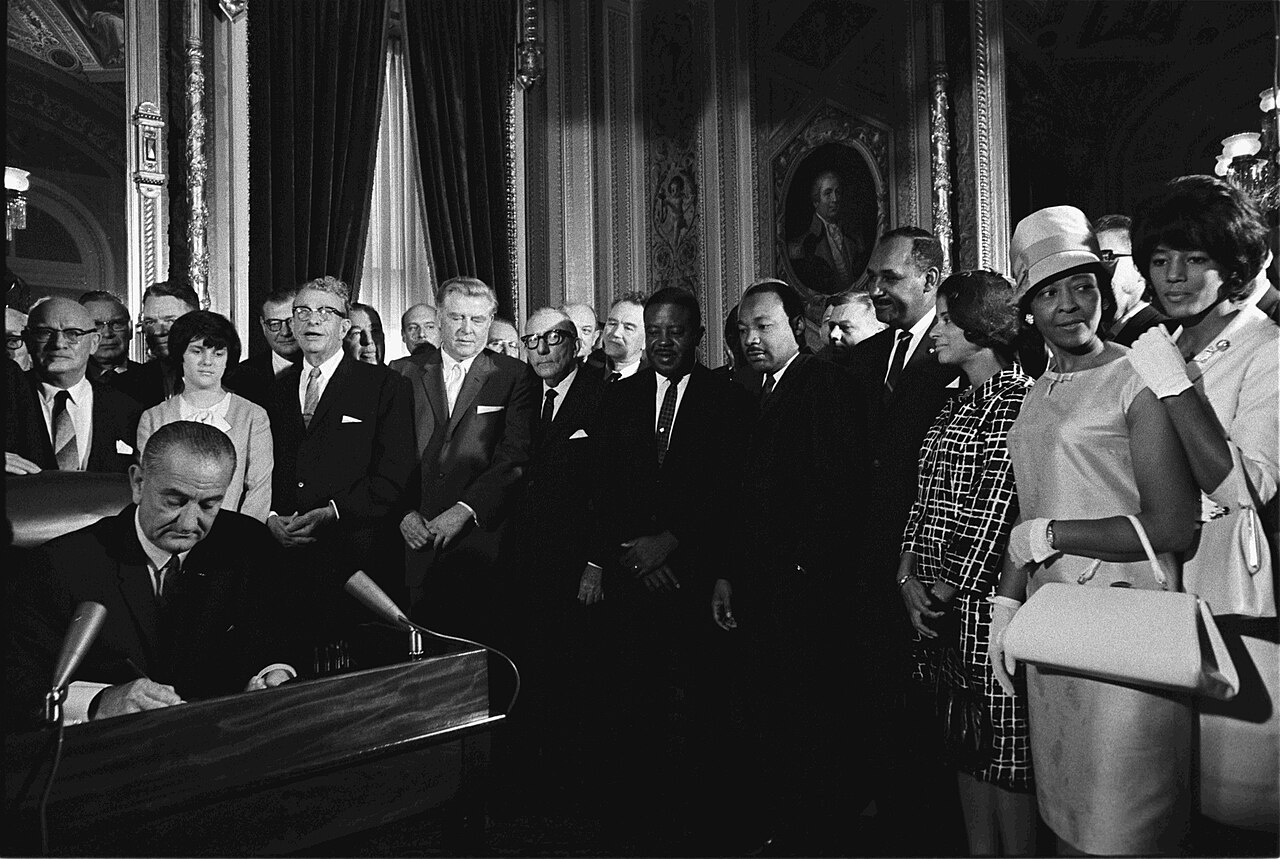
The Voting Rights Act of 1965 was enacted to dismantle the legal architecture of Jim Crow — literacy tests, poll taxes, and racially discriminatory district lines that locked Black Americans out of meaningful political participation for nearly a century after emancipation. Section 2 of the Voting Rights Act has been the workhorse of that effort, used in recent years to:
- Restore democracy to a small majority-Black town in Alabama where white mayors had repeatedly handpicked their (always white) successors5
- Help Hispanic residents win city council representation for the first time in a Washington state city where they make up a third of the population5
- Open the door for three Native Americans to win seats in the North Dakota legislature5
These are not abstract constitutional victories. They are concrete examples of communities of color gaining real political voice — voice that the Voting Rights Act made possible.
A Bipartisan Legacy: The 2006 Reauthorization
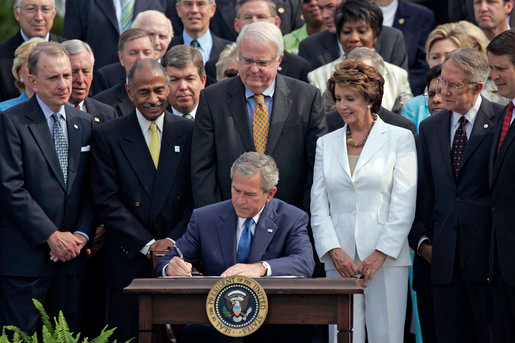
To understand how dramatically the legal and political landscape has shifted, it helps to look back to July 27, 2006. On that day, President George W. Bush signed H.R. 9 — the Fannie Lou Hamer, Rosa Parks, and Coretta Scott King Voting Rights Act Reauthorization and Amendments Act of 2006 — extending the law’s core enforcement provisions for another 25 years.6 The bill passed the Senate 98-0 and the House 390-33, a level of bipartisan support that is almost unimaginable for any major civil rights legislation today.7
The 2006 law did more than simply extend the Voting Rights Act. It reauthorized Section 5, which required jurisdictions with histories of voting discrimination to obtain federal “preclearance” before changing voting rules, and Section 203, which required translated materials and language assistance for voters with limited English proficiency.8 It also legislatively overturned two Supreme Court decisions — Reno v. Bossier Parish School Board (2000) and Georgia v. Ashcroft (2003) — that civil rights advocates believed had weakened Section 5 protections.9 At the signing ceremony, President Bush pledged that his administration would “vigorously enforce the provisions of this law” and “defend it in court.”6
The arc of the years since tells a sobering story. In 2013, the Supreme Court’s Shelby County v. Holder decision effectively gutted the Section 5 preclearance regime that the 2006 law had reauthorized with overwhelming bipartisan support. In 2026, Louisiana v. Callais significantly weakened Section 2, the remaining major enforcement tool. The Voting Rights Act that 98 senators voted to renew in 2006 is, less than two decades later, a substantially different law in practice. That trajectory is part of why the work of civic organizations matters so much now — the legal protections Congress thought it was securing for a generation have been narrowed by the courts faster than anyone anticipated.
The Immediate Fallout
The ruling is already reshaping the redistricting landscape. According to the Washington Post, the decision “could touch off a scramble by Republicans to redraw majority-minority congressional districts, especially in the South, that could cost many Black Democrats their seats.”1
Some lawmakers in Georgia, Alabama, and other Southern states have called for legislatures to redraw congressional maps in light of the decision.10 Florida is in the middle of a special legislative session aimed at flipping additional seats.5 Alabama Attorney General Steve Marshall celebrated the ruling as a “watershed moment” and pledged to apply it quickly to the state’s own ongoing redistricting fight.11
The impact extends far beyond Congress. Per local Alabama coverage, the ruling could affect “how districts are drawn for city councils, school boards and county commissions across the state.”12 Every level of American government where representation matters is now subject to the new, more restrictive standard.
Why SDARJ, the ACLU, and Allied Organizations Matter More Than Ever
When a major legal lever is weakened, the work of grassroots and legal advocacy organizations becomes more important — not less. Here is why.
1. Litigation Will Be Harder, But It Is Not Over
The ACLU, the NAACP Legal Defense Fund, the Brennan Center for Justice, and the Southern Poverty Law Center will continue to bring Voting Rights Act cases. The cases will be harder to win, requiring more sophisticated evidence and more creative legal theories. But each victory under the new standard will be more consequential, establishing the boundaries of what civil rights enforcement still looks like in a post-Callais America.
2. Public Education Becomes Central
The Southern Delaware Alliance for Racial Justice describes itself as “a non-partisan organization that educates, informs, and advocates for racial justice, equality, and fair opportunity.”13 That educational mission — long a complement to litigation — now becomes a primary front. Most Americans do not understand what Section 2 of the Voting Rights Act does, what redistricting is, or how district lines determine which communities have political voice. Organizations like SDARJ fill that knowledge gap through community programs, study groups, and public dialogue.
3. Local Organizing Carries More Weight
When federal courts are less available as a remedy, local political engagement matters more. Voter registration drives, get-out-the-vote efforts, school board advocacy, and city council engagement become the proving grounds for democratic participation. Groups like SDARJ — operating in communities like Sussex County, Delaware — and similar organizations across the country are positioned to do exactly this kind of ground-level work.
4. Coalition Building Multiplies Impact
SDARJ’s published list of partners includes the Brennan Center for Justice, the League of Women Voters, the Southern Poverty Law Center, and the Children’s Defense Fund.14 This kind of cross-organizational collaboration — connecting grassroots educators with national legal advocates — is exactly the infrastructure that civil rights movements have always relied on. The post-Callais era will demand more of it.
5. The Fight Is Bigger Than Voting Rights Alone
Systemic racism in America is not confined to redistricting. It shows up in criminal justice, housing, education, healthcare, and economic opportunity. SDARJ was founded out of a study group focused on Michelle Alexander’s The New Jim Crow, which examines mass incarceration as a successor system to legal segregation.15 The Voting Rights Act fight is one piece of a much larger struggle, and organizations that take that broader view are well-positioned to keep the work moving forward.
The Counterargument — And Why It Matters to Engage With It
It is worth being honest that supporters of the ruling reject the framing that it “guts” the Voting Rights Act. Their argument, broadly, is that the Constitution requires colorblind treatment of voters and that race-conscious districting is itself a form of discrimination. From that perspective, the Court has not rolled back civil rights — it has restored constitutional principle.
Anyone serious about the long-term work of racial justice has to be able to engage with that argument rather than dismiss it. The disagreement turns on a deeper question: Is systemic racism in voting a present-day reality requiring active remedy, or a historical problem that race-neutral rules can now adequately address? That is a debate worth having in public, and organizations like SDARJ that prioritize dialogue and education are precisely the venues where it can happen productively.
What You Can Do
If the ruling concerns you, here are concrete steps:
- Support organizations doing the work. SDARJ, the ACLU, the NAACP Legal Defense Fund, the Brennan Center for Justice, and the Southern Poverty Law Center all rely on member support to continue their advocacy.
- Engage locally. Attend school board meetings, city council sessions, and county commission hearings. Local representation is where the post-Callais fight will play out most concretely.
- Educate yourself and others. Read about the history of the Voting Rights Act, the Gingles test, and the trajectory of Section 2 enforcement. Understanding the legal terrain is the first step toward shaping it.
- Vote — and help others vote. Voter registration, ballot access, and turnout remain the foundation of democratic accountability, and they are within every citizen’s reach.
The Voting Rights Act Is Not the End of the Story
The Voting Rights Act has been challenged, narrowed, and partially restored many times since 1965. Each time, the work of civil rights organizations has been the difference between retreat and renewal. The Supreme Court’s Louisiana v. Callais ruling is a serious setback, but it is not the end of the Voting Rights Act, and it is not the end of the fight against systemic racism in America.
It is, instead, an invitation — to grassroots educators, to legal advocates, to ordinary citizens — to step further into the work. Organizations like SDARJ and the ACLU have been preparing for this moment for decades. The question now is whether the rest of us will join them.
Sources
-
Robert Barnes and Ann Marimow, “Supreme Court limits key provision of the landmark Voting Rights Act,” The Washington Post, April 29, 2026. https://www.washingtonpost.com/politics/2026/04/29/supreme-court-voting-rights-act-louisiana-voting-maps/ ↩ ↩2
-
WAFF News, “Supreme Court strikes down Louisiana congressional district, impacting Alabama redistricting fight,” April 29, 2026. https://www.waff.com/2026/04/30/supreme-court-strikes-down-louisiana-congressional-district-impacting-alabama-redistricting-fight/ ↩
-
CNN Politics, “Takeaways from the Supreme Court’s historic Voting Rights Act opinion and what’s next for the midterms,” April 29, 2026. https://www.cnn.com/2026/04/29/politics/takeaways-supreme-court-voting-rights-act ↩ ↩2
-
Mississippi Today, “US Supreme Court ruling could weaken voting rights protections,” April 29, 2026. https://mississippitoday.org/2026/04/29/supreme-court-voting-rights-ruling/ ↩
-
Democracy Docket, “Supreme Court guts Voting Rights Act, greenlights GOP gerrymanders,” April 29, 2026. https://www.democracydocket.com/news-alerts/scotus-smothers-voting-rights-act-greenlighting-racial-discrimination-and-a-rash-of-gop-gerrymanders/ ↩ ↩2 ↩3 ↩4
-
George W. Bush, “President Bush Signs Voting Rights Act Reauthorization and Amendments Act of 2006,” Office of the Press Secretary, The White House, July 27, 2006. https://georgewbush-whitehouse.archives.gov/news/releases/2006/07/20060727.html ↩ ↩2
-
Associated Press, “Bush signs Voting Rights Act extension,” NBC News, July 27, 2006. https://www.nbcnews.com/id/wbna14059113 ↩
-
NAACP Legal Defense and Educational Fund, “Voting Rights Act Reauthorization 2006.” https://www.naacpldf.org/case-issue/voting-rights-act-reauthorization-2006/ ↩
-
Ronald Reagan Presidential Library, “Legacy of the Voting Rights Act – Bridging the Old and New Millennium.” https://www.reaganlibrary.gov/legacy-voting-rights-act-bridging-old-and-new-millennium ↩
-
Georgia Recorder, “Supreme Court decision weakening Voting Rights Act could impact future political maps in Georgia,” April 29, 2026. https://georgiarecorder.com/2026/04/29/supreme-court-decision-weakening-voting-rights-act-could-impact-future-political-maps-in-georgia/ ↩
-
Office of the Alabama Attorney General, “Attorney General Marshall Applauds Momentous Supreme Court Redistricting Decision,” April 29, 2026. https://www.alabamaag.gov/attorney-general-marshall-applauds-momentous-supreme-court-redistricting-decision/ ↩
-
WBRC News, “Alabama leaders divided over Supreme Court voting rights decision,” April 29, 2026. https://www.wbrc.com/2026/04/30/alabama-leaders-divided-over-supreme-court-voting-rights-decision/ ↩
-
Southern Delaware Alliance for Racial Justice, “Mission Statement,” sdarj.org. https://sdarj.org/ ↩
-
Southern Delaware Alliance for Racial Justice, “Resources,” sdarj.org. https://sdarj.org/resources/ ↩
-
Southern Delaware Alliance for Racial Justice, “About,” sdarj.org. https://sdarj.org/about/ ↩