




African and African American Art: From Africa to America and the World
by DR. MARLENE A. SAUNDERS, MANAGING EDITOR, LET THE TRUTH BE TOLD | This article was originally published in Volume 18 of Black Voices. | Estimated reading time: 5:43
Of the 50 states in the U.S., Delaware is among only 13 that have legally mandated the instruction of Black history in grades K-12 in public schools. HB 198, passed in 2021, includes eight minimum content areas. One of these requires instruction on “…the history and culture of Black people prior to the African and Black Diaspora, including contributions to…art.” The grassroots organizations, parents, students, and civic organizations that tirelessly pressed the Delaware General Assembly to pass this legislation should be applauded. Their work ensures that students receive Black history instruction that goes beyond symbolic gestures and addresses the long-term absence of substantial African and African American history in public school curricula.
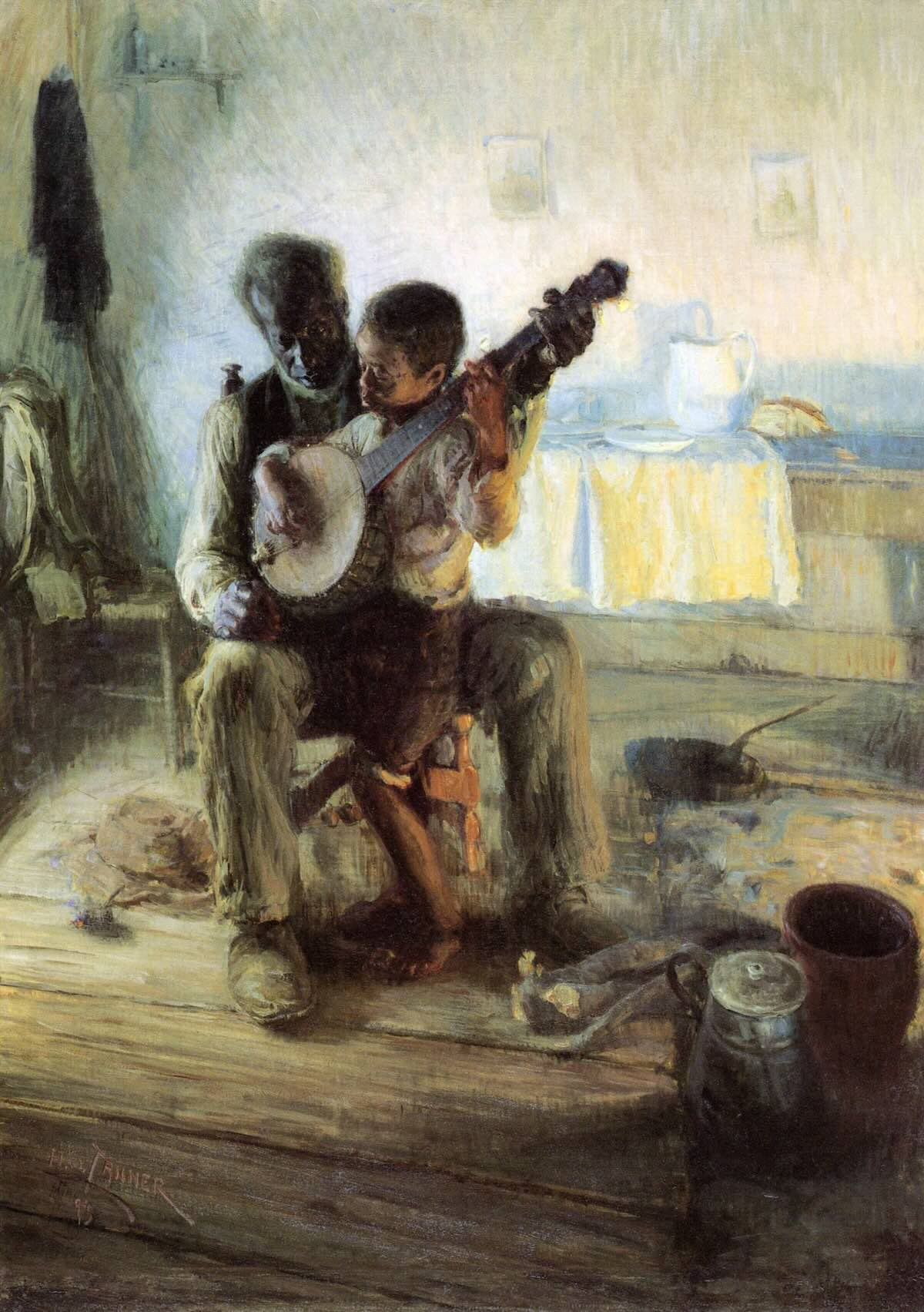
Nevertheless, this article is intended to support Delaware’s public schools’ efforts. It does not minimize the history of African art and African American art as influential expressions of culture in Africa, the U.S., Delaware, and the world. HB 198 placed many teachers in unknown terrain. That terrain will require years to traverse properly. In fact, former Delaware Secretary of Education Mark Holodick candidly admitted, “Many educators are not prepared to deliver what is required from the law because they don’t know the history and weren’t taught it themselves.” He continued, saying, “Teachers will be in a better spot in five to 10 years, after they have been taught how to teach the principles and the history while tying them to current events.”
Holodick’s assessment of teachers’ capacity to teach Black history raises a significant question: How does this affect art history instruction on Africa and the diaspora in the U.S.? If teachers lack sufficient knowledge of Black history, can parents reasonably expect them to teach about Africa’s rock art, the symbolism of African masks, and artists such as Henry O. Tanner, Edmonia Lewis, and Edmund Bannister, as well as poets, writers, and sculptors of the Black Arts Movement?
Further, if we believe that culture and art emerged in Africa, were brought to the U.S. by enslaved Africans, and then integrated into world art, this shows a common humanity. This strongly advocates for inclusive instruction on African and African American art.
A Hierarchy-Free Definition of Culture
Considering the above, what should children be taught about African art and artworks by African Americans? First and foremost, Delaware’s future diversity-conscious citizens and democratic leaders should not be influenced to think of culture according to a hierarchy where, for example, Europe and Europeans are at the top as creators of culture, knowledge, science, etc., and Africa and its descendants are situated not only as inferior but also as incapable of producing any elements of culture. Instead, after recognizing the origins of humankind, teachers should provide students with a definition of culture like “that complex whole which includes knowledge, belief, art, morals, law, custom, and other capabilities acquired by man as a member of society.”
Accordingly, students should be informed about anthropological and ethnographic studies that confirm “…the overwhelming preponderance of ancient hominid skulls and bones are unearthed in Africa.” Furthermore, all the variations and diversifications from the earliest of all to Homo sapiens arose in Africa.”
Is it, then, reasonable to conclude that, as the cradle of humanity and the origins of human culture, including art, Africa would be the first to emerge? Of course, because “…from Homo erectus to Homo sapiens, the stirrings of culture developed in Africa. Toolmaking, the use of fire, social organization, and communication through art (italics added) and language emerged.”
When teaching African art and art created by African Americans, what must teachers not overlook?
Despite recent scientific knowledge that discredits disparaging descriptions of Africa as devoid of history and, by implication, culture, historical racism prevails. This helps to explain the negative attitudes mainstream America has about Africa. For instance, a report titled “Stereotypes About Africa in Britain and the United States: A Social-Psychological Study of Their Impact on Engagement with Africa” found that “…everyday perceptions of Africa in the U.K. and the U.S. are still largely shaped by outdated and negative stereotypes – with profound consequence for how people engage with the continent culturally and economically” (Report reveals Western views of Africa are based on stereotypes of poverty, corruption and nature).
This report should concern teachers and parents because its findings indicate that historical and scientific racism continue to shape children’s views of African art and the work of African American artists in American and global cultures. As a result, teachers and parents must work to prevent the resurgence of ideas, such as those expressed by German philosopher Hegel in the nineteenth century and Oxford Professor Trevor-Rogers in the 1960s, in the attitudes and behaviors of Delaware’s future leaders. For example, Hegel wrote, “Africa is no historical part of the World, it has no movement or development to exhibit…What we properly understand by Africa, is the Unhistorical, Undeveloped Spirit…”
In 1963, Trevor-Roper said, “Perhaps in the future there will be some African history to teach. But at present, there is none; only the history of Europeans in Africa. The rest is darkness.”
What are Examples of Suggested Content Pertaining to African Art and African American Art?
Students should be taught about the confluence of African art and the artworks of America’s African American artists. Carter G. Woodson, the Father of Black History, noted “…extensive comment is not necessary to show the connection between African art and the achievements of American Negroes in this [art] sphere. Buildings, utensils, and ornaments made by Negro slaves in America during the early colonial period can still be pointed out in cities like Charleston, Savannah, and New Orleans.”
In addition, students should know that several African musical instruments were introduced to America by enslaved Africans. Examples include the banjo (mbanza in the Kimbundu speech ways of Central Africa; bangelo in Sierra Leone). Historical records show that by 1775, the xylophone (also known as balafons or balafos in Africa) was described in Virginia.
By the time students graduate from one of Delaware’s public high schools, they should know that African artists developed diverse traditions of sculpture (figures and masks), architecture, furniture, pottery, textiles, and jewelry. African American students and their parents, especially, are reclaiming African culture through clothing, hairstyles, and household items. Because of this, exposing all students to these traditions is no longer difficult. Images of African hairstyles and African masks, as well as sites that provide information on African and African American art, are plentiful online.
Although significant to the history of African American art, the Harlem Renaissance should not be taught as the signature period for African American art.
Students should also be informed about early Black artists like Edmonia Lewis (1844-1907) and Edmund Bannister (1828-1901), who emerged before the Civil War, as well as H. O. Tanner, who was the first African American to achieve international recognition.
Influence of African Art Worldwide
Content on African art should provide students with evidence of the extent to which African art influenced the work of European artists. These include French, German, and Italian artists that include Cezanne, Picasso, and Soutine in painting; Lipchitz, Modigliani, Archipenko, Brancusi, Epstein, and Lembruch in sculpture.
Conclusion
HB 198 is an antidote to historical racism, which breeds ignorance. The Delaware Department of Education (DDOE) has devoted considerable time and effort to recommending Black history content to each of the state’s school districts. This includes recommendations for essential Black history content developed by the University of Delaware’s Africana Studies program. It should be noted that Delaware is a “local control state.” This means each district has the constitutional right choose the content to be taught to students.
HB 198 does not exempt parents from working with teachers and school officials to ensure minimum content requirements are met. DDOE urges parents to visit the website listing each school district’s Black history curriculum by grade (Black History Education (HB 198) – Delaware Department of Education). After reviewing, contact your district’s HB 198 Lead for the district (Appendix B-LEA HB 198 Leadership 24-25-Google Docs.
Let’s not forget the lesson Dr. Martin Luther King, Jr. provided:
“Nothing in all the world is more dangerous than sincere ignorance and conscientious stupidity.”
Let us commit to fostering knowledge and critical thinking in Delaware’s future adult citizens and leaders.
Black Voices Newsmagazine
Read the current issue of Black Voices and browse through previous volumes in the archives. A hard copy of Black Voices is being distributed as an insert for Cape Gazette subscribers.