



From Borrowed Labor to Bold Leadership: The Black Role in America’s Wealth Story
By Jessica R Clark | This article was originally published in Volume 18 of Black Voices. | Estimated reading time: 8:30
“Borrowed Labor,” a politically correct euphemism for slave labor, reaches back to the fourth to sixth centuries, when people became indentured servants, who were primarily poor Europeans, agreeing to pay off a debt, such as rent or taxes, over a specified term owed to a king. Such bondage continued over several generations into the New World colonies.
The term “borrowed labor” was first quoted by Jean-Baptiste Say (January 5, 1767 – November 15, 1832), a liberal French economist and businessman. Born in Lyon, France, in 1785, he was sent to England to complete his education. He was one of the first economists to study entrepreneurship and entrepreneurs as organizers and leaders of the economy. Say saw labor as a factor of production and argued in favor of competition, free trade, and lifting restraints on business. It is likely that the first American colonists, who were businessmen, might have promoted Say’s theories and his “law of markets”—Say claimed that the production of a product creates demand for another product by providing something of value that can be exchanged for that other product. So, production is the source of demand.
Yet, Say also described slave labor as “this vicious system of production” where masters pocket profits, degrading everyone involved, contrasting with true free labor. His idea of borrowed labor implied voluntary exchange, the stark coercion of slavery.
Slavery’s Deep Economic and Societal Hold in America
As demand for labor grew, so did the need for indentured workers. After the establishment of Jamestown, Virginia, in 1607,
borrowed labor was first used to attract many skilled and unskilled laborers, as well as some petty criminals, in exchange for passage to the English colonies in the New World. They were initially treated as indentured labor or as indentured servants with the same rights as white people, versus enslaved people. Some laws were in place to protect their rights. Still, harsh working conditions and workers’ contracts were often extended for infractions such as violating the law, running away, or becoming pregnant.
Landowners, reluctant to deal with freed laborers and their demands for land and other rights, switched to using enslaved people as a more profitable alternative. Slaves were first introduced in the American colonies in 1619 when The White Lion, a Portuguese slave ship, brought 20 enslaved Black people to the British colony of Jamestown, Virginia, in exchange at auction for food.
Laws treating Black people as property rather than as people were first introduced in Massachusetts in 1641, when the legislature legalized slavery and stripped away whatever freedoms Black laborers had until then. This preference continued in the colonies and then the United States until the abolition of slavery in 1865.
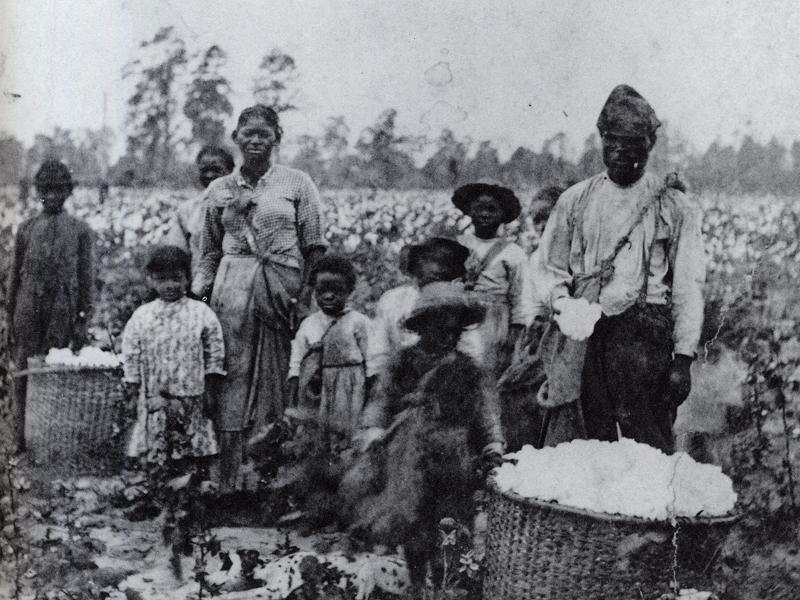
Throughout the 17th century, European settlers in North America turned to enslaved Africans as a cheaper, more plentiful labor source than Indigenous populations and indentured servants. Estimates of nearly 12.5 million enslaved Africans were brought to the Americas by European and American slave traders. In 1662, the Virginia colony, and later other English colonies, established that a slave’s legal status was inherited through the mother. As a result, the children of enslaved women legally became slaves. Throughout the 17th and 18th centuries, European and American slave merchants kidnapped enslaved Africans, transported them to the American colonies, and sold them at auction, forcing them into slavery. Slavery was never widespread in the North as it was in the South, but many northern businessmen grew rich on the slave trade and investments in southern plantations. Enslaved men and women also worked in northern cities such as Boston and New York, as well as in southern cities such as Charleston, Richmond, and Baltimore.
During the 18th century, approximately 6.5 million enslaved persons were transported to the Americas to work mainly on tobacco, wheat, indigo, sugar, cotton, and rice plantations along the southern Atlantic Coast, from the Chesapeake Bay colonies of Maryland and Virginia south to Georgia. At auction, enslaved people were sold to the person who bid the most money, and family members were often split up.
Before the rise of the American Revolution, the first debates to abolish slavery emerged. Black and white abolitionists contributed to the enactment of new legislation, gradually abolishing slavery in some northern states such as Vermont and Pennsylvania. However, these laws emancipated only the newly born children of enslaved women.
The first U.S. president, George Washington, owned enslaved people, along with many of the presidents who followed him. Thomas Jefferson, the third president, was born on a large Virginia estate run on enslaved labor. He wrote “all men are created equal” and consistently and publicly voiced strong moral opposition to slavery, calling it a “hideous blot.” In a deleted passage from the Declaration of Independence, he called it a “moral depravity, threatening the nation.” Yet, he enslaved more than six hundred people and struggled to free his slaves, viewing them as property and caught in a system he couldn’t escape. Expressing racist views about Black people, he wrote that he suspected Black people to be inferior to white people, and he doubted that the two races could coexist peacefully after emancipation and could not share the same government as free people. Jefferson relied on and profited from slave labor for Monticello’s economic power, as did many other slave owners. Jefferson never entirely freed the people he enslaved, embodying the national hypocrisy of founding a nation on liberty while practicing bondage.
Though the U.S. Congress outlawed the African slave trade in 1808, the domestic trade flourished, and the enslaved population in the United States nearly tripled over the next 40 years. By 1860, bondage had reached almost 4 million, with more than half living in the South’s cotton-producing states.
By the mid-19th century, westward expansion and the abolition movement provoked the great slavery debate that would tear the nation apart in the Civil War. Though the Union victory freed the nation’s four million enslaved people, the legacy of slavery continued to influence American history from the Reconstruction to the Civil Rights Movement that emerged a century after emancipation and beyond.
Some Notable Black Economists in the Early Days of Our Country
Political economists in the late 18th and early 19th centuries were divided over whether or not the system of slave labor was profitable.
Notable Black economists range from historical pioneers like Abram Lincoln Harris, Jr., the first nationally recognized Black economist (January 17, 1899 to November 6, 1863), academic, anthropologist, and social critic of the condition of Black people and Black businesses in the United States.
Sadie Tanner Mossell Alexander (January 2, 1898 – November 1, 1989), a civil rights activist of the early to mid-20th century, earned her master’s degree in 1919 and was one of three Black women to earn a Ph.D. in economics in 1921 from an American university. In 1927, she was the first Black woman admitted to the University of Pennsylvania Law School, to receive a law degree; the first to be admitted to the Pennsylvania Bar; and the first to practice law in the state. Also at Penn, she specialized in estate, family, and civil rights law from 1927 until her retirement in 1982. She was the first woman to serve as secretary to the National Bar Association. She opened her own law office in 1959.
Phyllis Ann Wallace (June 9, 1921 – January 10, 1993) was the first woman to receive a doctorate in economics from Yale in 1948. She dedicated much of her professional life to studying data on workplace discrimination. She joined the faculty of what is now called the Massachusetts Institute of Technology Institute for Work and Employment Research. She became the first woman to receive tenure at MIT Sloan. When Mount Holyoke conferred an honorary Doctor of Laws degree on Professor Wallace in 1983, the citation stated, “Beginning your career at a time when neither Blacks nor women had a fair chance, you have witnessed great progress toward equal employment opportunity – progress due, in no small measure, to your scholarship on the economics of discrimination in the labor market.” When she retired in 1986, scholars in industrial and labor relations and economics from around the world gathered at MIT for a conference in her honor. The Sloan School endowed the Phyllis A. Wallace Doctoral Fellows Fund, which provides support for Black students admitted to the school’s doctoral program.
Contemporary Black Economists
Contemporary economics is the modern study and application of economic principles, focusing on real-world issues such as globalization, technology, inequality, climate change, and financial crises. Updated data, advanced methods (game theory, econometrics), and interdisciplinary approaches are used to analyze global challenges and policy impacts, addressing complexity and uncertainty.
Some Black contemporary economists are Lisa Cook (born in 1964), who earned a Ph.D. in economics from the University of California, Berkeley, and became a professor of economics and international relations at Michigan State University. From 1997 to 2002, she was a visiting assistant professor at the Kennedy School of Government at Harvard University and Harvard Business School, and deputy director of Africa Research at Harvard’s Center for International Development. She is considered an authority on international economics. She also served on the board of
directors of the Federal Reserve Board of Chicago and was a research associate at the National Bureau of Economic Research. From 2021 to the present, she has served as the first Black woman on the Federal Reserve Board of Governors. Cook is regarded as one of the few prominent Black female economists and, within academia, is honored for her efforts to mentor Black women and advocate for their inclusion in the field of economics. Since 2016, she has directed the American Economic Association’s Summer Program for underrepresented minority students.
Philip Jefferson (born 1961) earned a BA in economics from Vassar College and an MA and Ph.D. in economics from the University of Virginia. Jefferson has served as chair of the Department of Economics at Swarthmore College, president of the National Economic Association, Vassar College Board of Trustees, at the Federal Reserve Bank of Minneapolis, and Vice Chair of the Federal Reserve Board of Governors.
Ebonya Washington, a graduate of Brown University, earned her Ph.D. in economics from MIT and is a professor at Columbia University whose research has pioneered methods for measuring discrimination. Her research focuses on the political economy of low-income and minority constituents and the processes through which low-income Americans meet their financial needs. She was formerly Professor of Economics at Yale University. Washington has written and lectured extensively about the difficulties for African Americans in the economics profession. In the media, Washington is quoted for her research on presidents and election trends.
Duke University professor, Dr. William A. Darity, Jr., is the leading expert on racial inequality and reparations and is the founder of stratification economics, which examines how social hierarchies influence economic outcomes. Darity’s research focuses on inequality by race, class, and ethnicity, and the racial achievement gap. His extensive economic work applies knowledge to public policy and has made him one of the most influential economists working on issues of race and economics in America today. He has written extensively on racial inequality and is a prominent voice in economic policy discussions. His most recent book, coauthored with A. Kirsten Mullen is “From Here to Equality: Reparations for Black Americans in the 21st Century.”
Black economists have made and continue to make significant contributions to the field of economics and public policy in America. Reports from the Federal Reserve Board, Urban Institute/Brookings (2024), the National Bureau of Economic Research (2022), and Pew Research (2023) underscore systemic economic barriers and the stark wealth disparity between Black and White Americans. Redlining, the systemic and discriminatory practice by which financial services – mortgages and insurance – are denied or limited to residents of specific neighborhoods based on race or ethnicity rather than individual creditworthiness, is widely cited as a primary driver of the current wealth gap. Although outlawed by the Fair Housing Act of 1968, its effects persist through credit access, where residents in predominantly white neighborhoods are significantly more likely to receive credit cards and favorable mortgage terms than those in predominantly Black neighborhoods.
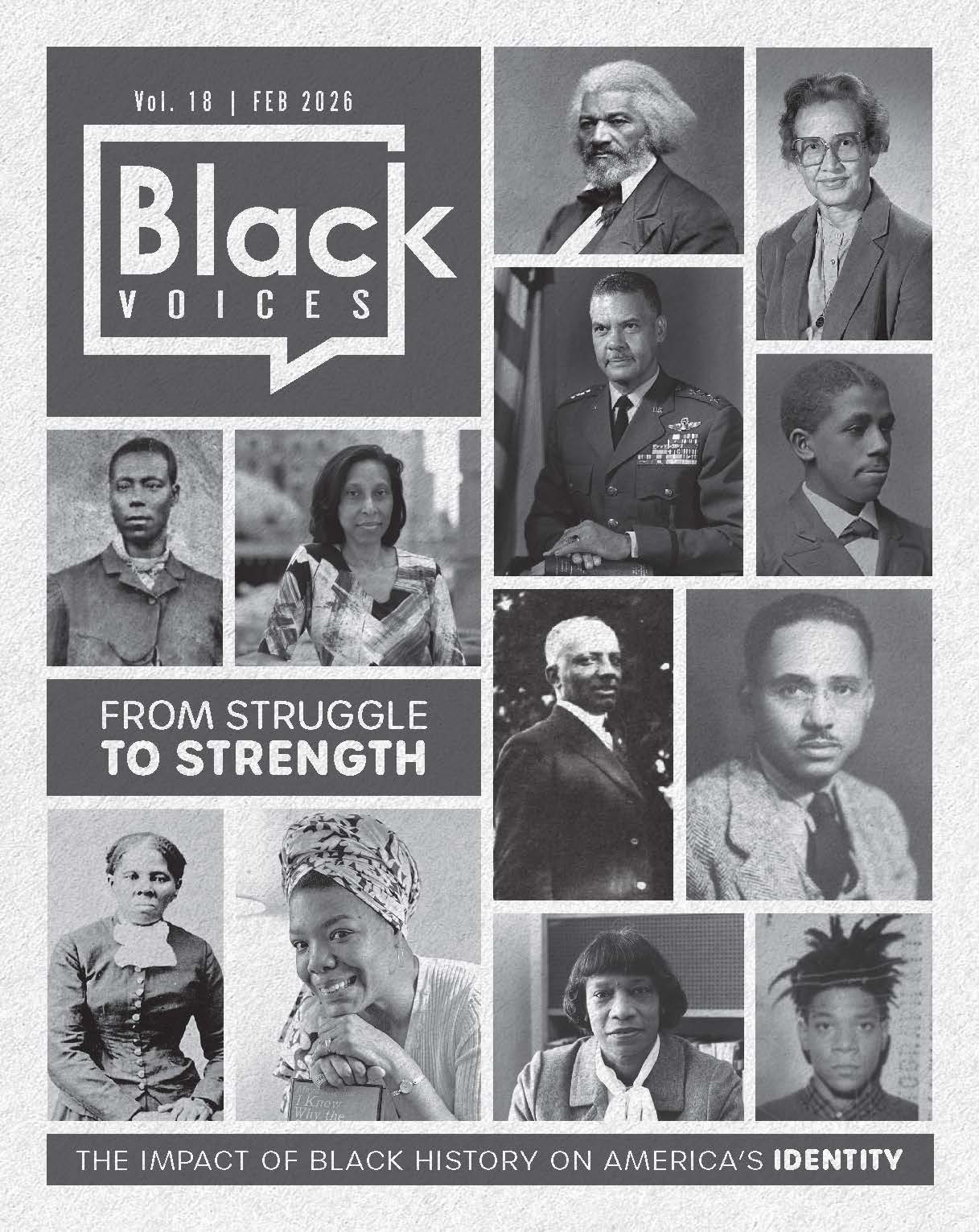
Black Voices Newsmagazine
Read the current issue of Black Voices and browse through previous volumes in the archives. A hard copy of Black Voices is being distributed as an insert for Cape Gazette subscribers.