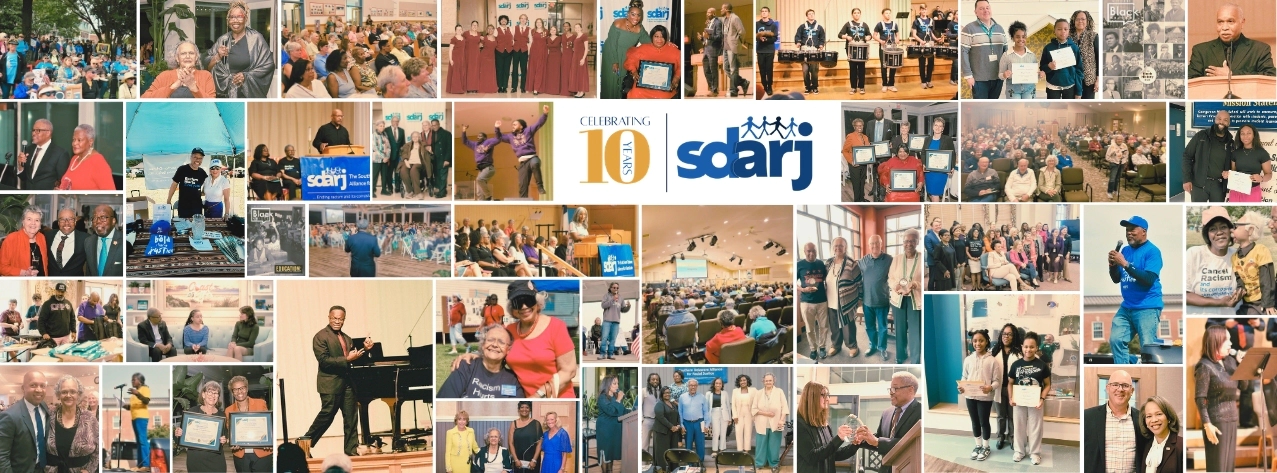
Ten Years of Doing the Work Celebrating SDARJ’s First Decade
This year marks a milestone for the Southern Delaware Alliance for Racial Justice (SDARJ): a full decade of educating, informing, and advocating for racial justice, equality, and fair opportunity across Sussex County and beyond. Founded in June 2015 and officially incorporated September 30th 2016 as a 501C3 nonprofit, SDARJ grew from a community coalition determined to confront racism’s corrosive impact with practical action—programs, public conversations, youth investment, and sustained advocacy.
From its earliest days, SDARJ has centered a simple, hard truth: racism isn’t only personal prejudice—it is also structural, and its consequences show up in who gets heard, who gets protected, who gets opportunity, and who gets left behind. That understanding has shaped SDARJ’s work for ten years, from civic education and town halls to scholarships and reentry support.
A founder’s legacy: Charlotte King and the Delaware Women’s Hall of Fame
Any 10th anniversary celebration of SDARJ must begin with Charlotte King, the organization’s founder and long-time chair. King co-founded SDARJ and served as chair for most of its existence, helping establish the organization’s mission, partnerships, and public presence in southern Delaware.
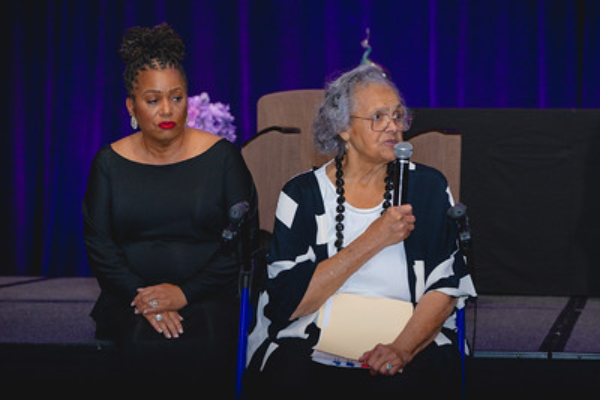
Charlotte King speaking at the Delaware Women’s Hall of Fame induction ceremony, in 2025, King’s impact received statewide recognition when she was inducted into the Women’s Hall of Fame at the October 8 ceremony in Wilmington. The state’s Office of Women’s Advancement and Advocacy notes her SDARJ leadership—founder, long-time chair, and chair emeritus—among the contributions that earned her this honor.
That induction is more than a personal accolade. It reflects how SDARJ’s work—rooted in Sussex County—has helped expand Delaware’s broader civic conversation about equity, belonging, fairness and justice.

Investing in young leaders: SDARJ scholarships and student recognition
Over the decade, SDARJ has paired public education with direct investment in students. One signature effort is the Charlotte King Scholarship Program, which provides $1,500 scholarships to selected Sussex County students continuing their education beyond high school.
The scholarships recognize Black students who demonstrate leadership, service, and a commitment to advancing racial understanding and justice—qualities SDARJ views as essential to building a stronger community.
SDARJ also spotlights student excellence through recognition programs in local school communities—another reminder that racial justice work includes celebrating achievement and widening opportunity.
The heart of SDARJ’s public work: Town halls that meet the moment
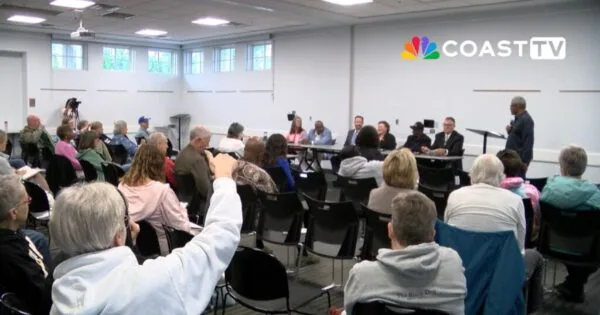
A decade in, SDARJ’s town halls remain one of its most visible and trusted community tools—spaces where residents can listen, learn, ask questions, and engage respectfully across differences. SDARJ hosts ongoing town halls and archives many of them for wider access.
Across the years, SDARJ town halls have addressed urgent issues and under-told local history. Just a sample of topics includes:
- Police and Community Relations—examining public safety and accountability through community dialogue.
- Criminal Justice Reform—including presentations connected to reform agendas and legislative priorities.
- Black Farmers Racial Bias in Sussex County Fire Departments—SDARJ brought the community and local fire department leadership to discuss the issue of bias in Sussex county volunteer fire departments.
- Black Voices Matter—a forum focused on representation, voice, and civic power in Sussex County and Delaware.
- Saving Medicaid and Social Security—connecting racial justice to policy choices that shape health, aging, disability, and economic security.
- Spotlight on local Black history—including a town hall featuring the Milford Museum’s African American history exhibit.
- The state of Black-owned businesses in Delaware—a forum centering economic equity and entrepreneurship.
Together, these town halls show what SDARJ has learned over ten years: racial justice is not a single issue. It touches policing, education, voting, health, history, and economic opportunity—and communities need places to work through those connections in real time.
“Dialogue Toward Ending Racism”: A free, sustained program for change now in its seventh year.
If town halls are SDARJ’s public square, its Dialogue Toward Ending Racism (DTER) seminars are the organization’s workshop—where change becomes personal, practical, and sustained. DTER is a free, guided discussion program that is run in small groups, built to help participants explore the history, causes, and impacts of racism and bias, and to develop skills for addressing racism.
The Returning Citizens Support Committee: Making reentry more humane—and more successful
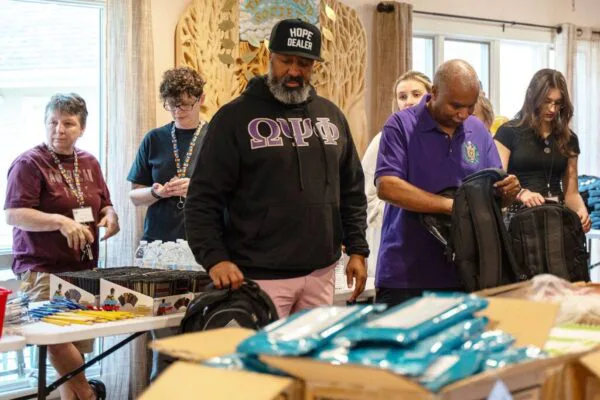
In 2024, SDARJ launched its Returning Citizens Support Committee with a clear long-term goal: help reduce recidivism by supporting people returning from incarceration as they navigate barriers to successful reentry.
The focus is explicit—improving access to essential resources and serving as a point of contact for organizations and opportunities that help returning citizens rebuild stability.
And the committee’s work has been tangible. The committee distributes “dignity backpacks” for people returning from Delaware prisons and advocates for criminal justice reform in Dover.
Legislative Advocacy: SDARJ works with the Delaware state legislature on issues of importance to African Americans in the state including voting access, criminal justice reform, education and more.
A Voice for Social Change: SDARJ is an important communications vehicle for social justice in Sussex county. Annually, we send out over 80,000 copies of Black Voices newsmagazine, over 200,000 emails, over 1500 people attended our events in 2025, we appeared on local TV over a dozen times and in printed publications about two dozen times. We are an important community presence in a county with almost no Black reporters, radio stations or publications outside of Black Voices.
SDARJ Book and Film Club: Now in its seventh year, the SDARJ Book and Film Club meets monthly using the arts to enlighten and illustrate issues of race and social justice.
Black American Film Festival: The Black American Film Festival happens yearly in February, Black History Month showing both dramatic and documentary films about the Black experience. Now in its seventh year, the film festival is done in partnership with the Rehoboth Beach Film Society.
Addressing the Silences: SDARJ is working with the John Dickenson Plantation to tell the story of plantation life from the standpoint of enslaved people who lived and labored on this Delaware plantation.
Powered by volunteerism – over 130 people volunteered on SDARJ projects and programs last year. SDARJ is financed by small individual contributions, proceeds from our events and a few corporate based donations. SDARJ has no full-time employees. Even the Black Voices newsmagazine is written and edited solely by volunteers.
A decade in—and still moving
Ten years after its founding, SDARJ’s story is one of sustained community-building: honoring local leaders, investing in students, opening hard conversations, and translating values into action. The work to end racism is never finished, because racism’s “terrible consequences” are not abstract—they are lived in unequal outcomes, diminished voice, and preventable harm. SDARJ’s first decade has shown what’s possible when a community refuses to accept that as normal—and chooses, again and again, to do the work.