


Women Who Wouldn’t Be Silent Black Women and the Fight for Voting Rights
By Jessica R Clark | This article was originally published in Volume 21 of Black Voices. | Estimated reading time: 8:22
“We who believe in freedom cannot rest until it comes.”
– Ella Baker
Before the last quarter of the 19th century, women had no legal rights. After marriage, their property and wages became their husband’s. The 15th Amendment to the United States Constitution, ratified on February 3, 1870, granted Black men the right to vote. It wasn’t until 1873, when a law was passed giving women the right to make a will, purchase real estate, and hold it exempt from their husband’s debts. In 1897, when Delaware’s constitution was rewritten, voters rejected a provision granting women the right to vote.
The early years of the Women’s Rights Movement date back to 1848, when for the first time small groups of women working individually joined together at the National Women’s Convention in Seneca Falls, New York. At the time, women did not have the right to attend college, own property, or enter male-dominated professions such as medicine and law.
During the 19th and 20th centuries, Black women played a crucial and active role in the struggle for universal suffrage, advocating for voting rights despite facing significant racial and gender discrimination that complicated their voting rights fight. They participated in political meetings, organized political societies, attended political conventions at local churches, and developed strategies to gain the right to vote. In the 1800s, more Black women worked for churches, newspapers, secondary schools, and colleges, giving them a larger platform to promote their ideas.
But despite their hard work, many people did not listen to Black women. Black men and white women usually led civil rights organizations and set the agenda. White suffragists often excluded Black women from their organizations and activities. For example, the National Woman Suffrage Association (NWSA) prevented Black women from attending their conventions, and Black women often had to march separately from white women in suffrage parades. When Elizabeth Cady Stanton and Susan B. Anthony wrote the History of Woman Suffrage in the 1880s, they featured white suffragists while ignoring the Black suffragists’ contributions.
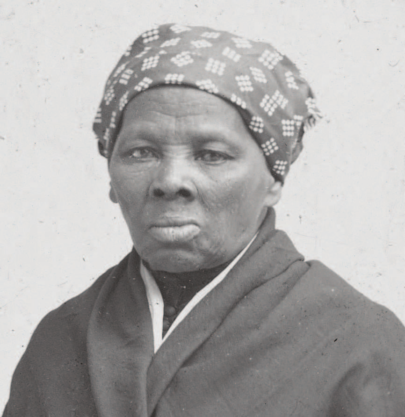
“Every great dream begins with a dreamer.
Always remember, you have within you the strength, the patience, and the passion to reach for the stars to change the world.”
– Harriet Tubman
Harriet Tubman
Harriet Tubman was born around 1822 to enslaved parents in Dorchester County, Maryland. She is best known for her work on the Underground Railroad, a network of safe houses and transportation provided by abolitionists. For 10 years, she returned to Maryland and Delaware 19 times, liberating around 300 enslaved people. If she had been captured, she faced a severe flogging or worse, a lifetime sentence of slavery. Abolitionist William Lloyd Garrison nicknamed her “Moses.” Her most brazen exploit was leading a young woman named Tilly through Seaford in broad daylight.
Michael Morgan, writing in the Salisbury Daily Times in 2024, explained her Underground Railroad role: She used the North Star as her guide and, on cloudy nights when the stars were not visible, followed the streams and creeks that ran down the spine of Delaware and separated waters that flowed into the Chesapeake Bay from those that emptied into the Delaware Bay. A formidable task for all freedom seekers traveling from southern Delaware was crossing the Chesapeake and Delaware Canal, which stretched across what is now called the Delmarva Peninsula. Morgan states the canal’s waters were 66 feet wide and a swimmer of moderate ability could cross it. Those who could not swim used a log as a rudimentary raft and paddled their way across. At either end of the canal were locks whose doors could provide nimble fugitives a footbridge over the canal, but they risked not only falling, but also discovery by the lock’s operators.
In 1862, Tubman traveled to South Carolina, where soldiers were dying of typhoid, cholera, malaria, yellow fever, chickenpox, and dysentery. Tubman’s knowledge of local roots to treat diseases and her healing powers became legendary among soldiers. Tubman was the only Black woman volunteer among all white troops in the Civil War at Fort Monroe in Virginia. Although Black people were under scrutiny and many doubted their commitment and bravery, after the Emancipation Proclamation of January 1, 1863, Black people were allowed to enroll in the military. Tubman’s role was to assist mostly Black fugitives who joined the ranks with families and small children, feeding them and supervising their work as manual laborers building roads and dikes. She worked as a nurse, cook, and dishwasher.
Tubman also became commander of a group of espionage scouts to create lifelines and escape routes for trapped slaves and provided the Union Army with vital intelligence. In 1863, Tubman guided a troop of 150 Black soldiers of the Second South Carolina Battalion to liberate as many enslaved people as possible by catching slaveholders by surprise. The attack became known as the Combahee River Raid and liberated more than 750 enslaved people.
After the war ended in 1865, she returned home to Auburn, New York. A battle for compensation for her services lasted 30 years.
Her work on the Underground Railroad and her role as a spy in the Civil War prepared her for her later work after slavery was abolished, as she continued to advocate for others’ rights. Tubman believed in the equality of all people, Black or white, male or female, which made her sympathetic to the women’s rights movement. As a woman who fought for her own freedom and the freedom of others, she toured New York, Boston, and Washington, giving speeches about her experiences and the impact she had on those who found freedom, and speaking in favor of women’s suffrage. In 1896, although frail, she was a guest speaker at the first meeting of the National Association of Colored Women. Despite being illiterate, Tubman’s speeches were popular and powerful.
Tubman and the 16th president of the United States, Abraham Lincoln, formed an alliance to end slavery. Her many letters to Lincoln advocated for Black Americans’ rights and discussed slavery issues and military strategies. Tubman was a likely influence on Lincoln’s Emancipation Proclamation, issued in 1862, and the 13th Amendment abolishing slavery in 1865.
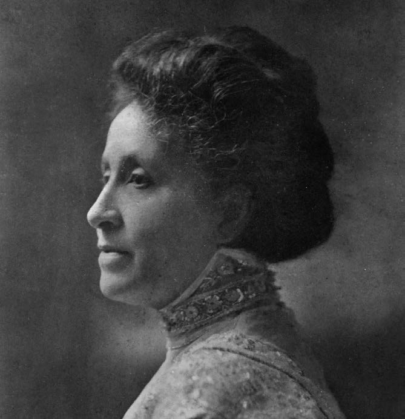
Mary Church Terrell
In 1895, Howard High School, built in the 1920s by Delaware businessman Pierre S. du Pont, who supported education for Black students in Delaware, held a women’s suffrage debate and hosted Mary Church Terrell at the school’s commencement exercises. Terrell was born in 1863 to freed slaves at the end of the Civil War. Terrell was among the earliest Black women to earn an Oberlin College degree and, through her class position, fought racial discrimination and excelled in social activism. In 1892, she helped form the Colored Women’s League in Washington, D.C.
Terrell was active in suffragist circles such as the NWSA, where she became associated with Susan B. Anthony and Elizabeth Cady Stanton. He was one of the few Black women to attend NWSA’s meetings. She spoke directly about the injustices and issues within the Black community, focusing on Black women’s empowerment. However, she had to fight Anthony and Cady Stanton on their views of non-white women’s suffrage. Though many Black women were concerned and involved in the fight for American women’s right to vote, the NWSA did not allow Black women to create their own chapter within the organization. Terrell’s autobiography, A Colored Woman in a White World (1940) recounts her personal experiences with racism.
Sadie Monroe Waters
On June 2, 1920, Delaware’s General Assembly dashed all hopes that the First State would be the final state to ratify the 19th Amendment to the U.S. Constitution guaranteeing women’s right to vote. In August, Tennessee’s legislature cast the crucial vote needed to reach the 36 states required to ratify. That fall, leaders of the Delaware Association Opposed to Woman Suffrage targeted Black women, arguing they would be unfit voters and used racially charged arguments to bolster their position. They frequently used demeaning, insulting, and inflammatory stereotypes. Black suffragists responded forcefully to the insults.
Bridgeville resident Sadie Monroe Walters, educated at Morgan College in Baltimore (now Morgan State University) and, in 1891, a teacher at the Greenwood Colored School [Delaware], believed all newly enfranchised women should be able to vote freely. In September, 1920, Waters became vice president of a women’s organization dedicated to registering voters. Shortly before Election Day, Walters delivered what the Wilmington Evening Journal termed a “masterly address” to an enthusiastic audience in eastern Sussex County.
Black suffragists’ broad program encompassed racial equality, including equalization of facilities, curricular offerings, teachers’ salaries across the state’s segregated schools, criminal justice reform, and state funding for institutions – such as hospitals – serving Black communities. Waters advocacy, like that of Black suffragists elsewhere, was part of a larger, ongoing freedom struggle.
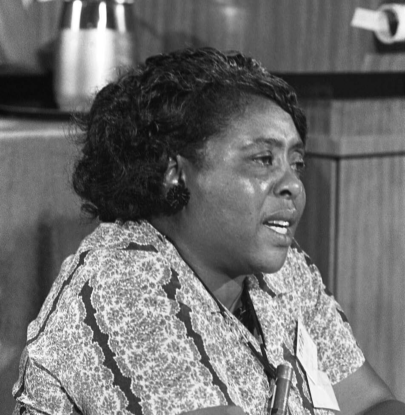
Fannie Lou Hamer
Fannie Lou Hamer, born in 1917, was an American voting and women’s rights activist, community organizer, and civil rights leader. From age six, Hamer picked cotton with her family in Mississippi. At age 12, she had to leave school to help support her aging parents. By age 13, she picked 200 to 300 pounds of cotton daily while living with polio. In 1961, Hamer was subjected to a hysterectomy without her consent while she was undergoing surgery to remove a uterine tumor. Forced sterilization was a common method of population control that targeted poor, black women. The Hamers later adopted four girls. One daughter was denied admission to the local hospital because of her mother’s activism.
In 1963, Hamer passed the literacy test required to vote, and although she was a registered voter, her county also required voters to have two poll tax receipts. Later, she was able to pay for the requisite poll tax receipts.
She was threatened, harassed, shot at, and assaulted by racists, including the police, while trying to register to vote. Nevertheless, she persisted and became vice chair of the Freedom Democratic Party, which she represented at the 1964 Democratic National Convention. The Freedom Democratic Party was formed to challenge racial exclusion in Mississippi politics, register Black voters, and seek recognition at the 1964 Democratic National Convention.
Hamer also organized the Student Nonviolent Coordinating Committee (SNCC) and co-founded the National Women’s Political Caucus, created to recruit, train, and support women of all races seeking election to government offices.
Hamer’s memorial service drew a large crowd when she died in 1977, and U.S. Ambassador to the United Nations Andrew Young delivered the eulogy. She was inducted into the National Women’s Hall of Fame in 1993, and in January 2025, President Joe Biden posthumously awarded Hamer the Presidential Medal of Freedom.
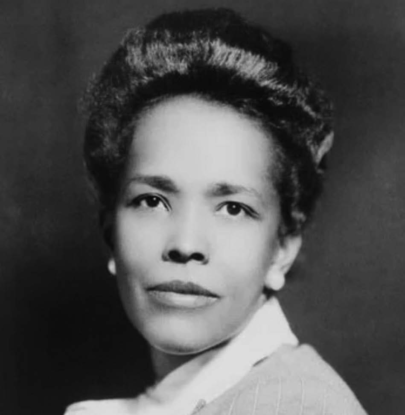
“We who believe in freedom cannot rest until it comes.”
– Ella Baker
Ella Baker
Ella Baker was largely a behind-the-scenes organizer whose career spanned more than five decades. She worked alongside some of the most noted civil rights leaders of the 20th century, including W.E.B. Du Bois, Thurgood Marshall, A. Philip Randolph, and Martin Luther King, Jr.
In the 1960s, she was the primary advisor and strategist for the Student Nonviolent Coordinating Committee (SNCC), and she mentored many emerging activists as leaders. She was described as “one of the most important American leaders of the 20th century and perhaps the most influential woman in the civil rights movement.
The 19th Amendment to the Federal Constitution, which prohibited denying the right to vote to citizens of the United States based on sex, in effect recognized women’s right to vote. But when granting women the right to vote was considered by the Delaware legislature, it, too, was defeated. It was when enough states ratified the 19th Amendment that Delaware women were granted the right to vote. Though Black women are less well remembered, they played an important role in getting the Fifteenth and Nineteenth Amendments passed.