


Military Series – Robert Smalls
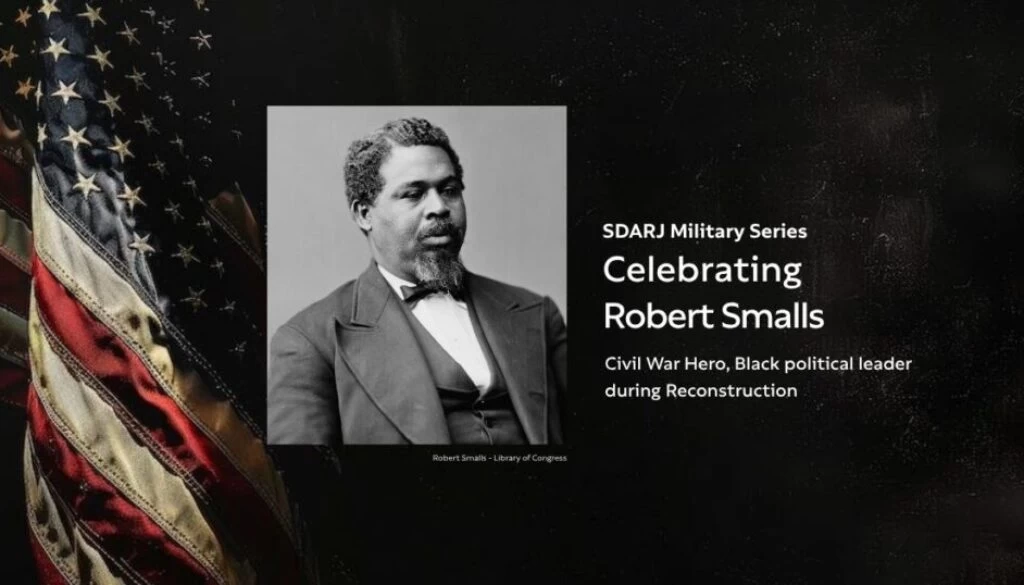
Robert Smalls was born in 1839, enslaved by a local planter in Beaufort, South Carolina. By the time he was 23 years old, Smalls had won freedom for himself and his family, and was a famous war hero. He became a prominent leader in the community during the Reconstruction era, including service in both the state and national legislature. His story illustrates the transformative potential of Reconstruction throughout the southern United States.
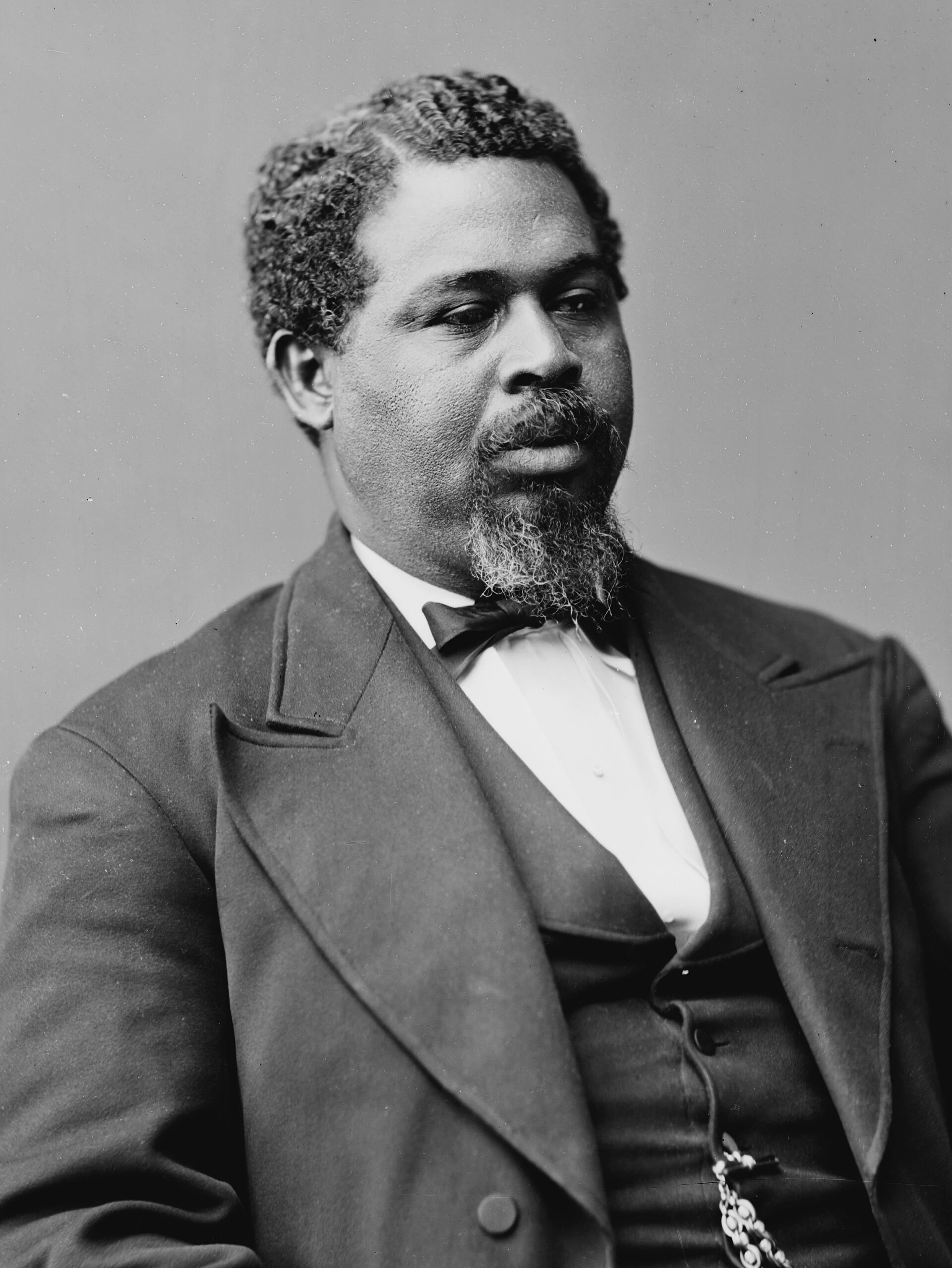
Robert Smalls Civil War Hero, Black political leader during Reconstruction
Robert Smalls (April 5, 1839 – February 23, 1915) was an American politician who was born into slavery in Beaufort, South Carolina. During the American Civil War, the still enslaved Smalls commandeered a Confederate transport ship in Charleston Harbor and sailed it from the Confederate-controlled waters of the harbor to the U.S. blockade that surrounded it. He then piloted the ship to the Union-controlled enclave in Beaufort–Port Royal–Hilton Head area, where it became a Union warship. In the process, he freed himself, his crew, and their families. His example and persuasion helped convince President Abraham Lincoln to accept African-American soldiers into the Union Army.
After the Civil War, Smalls returned to Beaufort and became a politician, winning election as a Republican to the South Carolina Legislature and the United States House of Representatives during the Reconstruction era. He authored state legislation providing for South Carolina to have the first free and compulsory public school system in the United States. He was a founder of the Republican Party of South Carolina and the last member of that party to represent South Carolina’s 5th congressional district until the election of Mick Mulvaney in 2010.
Honors & Legacy
- Since 2023, the state of South Carolina has celebrated Robert Smalls Day every May 13.
- The Robert Smalls House in Beaufort has been designated a National Historic Landmark.
- During World War II, Camp Robert Smalls was established as a sub-facility of the Great Lakes Naval Training Center to train black sailors (the Navy was segregated at that time).
- The Robert Smalls School in Cheraw, South Carolina is named for him.
- Waterfront Park in Charleston contains a small pedestal with a plaque explaining Smalls’ contributions to the area.
- On March 1, 2023, the Navy renamed USS Chancellorsville to USS Robert Smalls after Smalls, based on a recommendation from The Naming Commission.
After the Civil War
Business Ventures
Immediately following the war, Smalls returned to his native Beaufort, where he purchased his former enslaver’s house at 511 Prince St., which Union tax authorities had seized in 1863 for refusal to pay taxes. Later, the former owner sued to regain the property, but Smalls retained ownership in the court case. The case became an important precedent in other, similar cases. His mother, Lydia, lived with him for the remainder of her life. He later allowed his former enslaver’s wife, the elderly Jane McKee, to move into her former home prior to her death.
Smalls spent nine months learning to read and write. He purchased a two-story Beaumont building to use as a school for African-American children.
In 1866, Smalls went into business in Beaufort with Richard Howell Gleaves, a businessman from Philadelphia. They opened a store to serve the needs of freedmen. Smalls also hired a teacher to help him study.[21] That April, the Radical Republicans that controlled Congress overrode President Andrew Johnson’s vetoes and passed a Civil Rights Act. In 1868, they passed the 14th Amendment, which was ratified by the states to extend full citizenship to all Americans regardless of race.
In Politics
Smalls’s wartime fame and his fluency in the Gullah dialect gave him an avenue for political advancement.
Smalls was one of the founders of the South Carolina Republican Party. The Republican Party was the political party that dominated the Northern states and passed laws granting protections for African Americans in the aftermath of the Civil War. On August 22, 1912, Smalls wrote to U.S. Senator Knute Nelson: “I never lose sight of the fact that had it not been for the Republican Party, I never would have been an office-holder of any kind—from 1862 to the present.” In words that became famous, he described his party as “the party of Lincoln…which unshackled the necks of four million human beings.” He wrote this line on September 12, 1912, in a letter expressing his anxiety over the looming presidential election. In that letter, he concluded: “I ask that every colored man in the North who has a vote to cast would cast that vote for the regular Republican Party and thus bury the Democratic Party so deep that there will not be seen even a bubble coming from the spot where the burial took place.“
- In 1868, Smalls was elected as the first black member of the South Carolina House of Representatives.
- In 1874, Smalls was elected to the United States House of Representatives, where he served two terms from 1875 to 1879.
- From 1882 to 1883, he represented South Carolina’s 5th congressional district in the House.
- Smalls was elected from the 7th district and served from 1884 to 1887. He was a member of the 44th, 45th, 47th, 48th and 49th U.S. Congresses.
- Though Smalls was not officially involved with politics on the local level, he had some influence.
The Escaped Civil War Slave Who Impersonated A Confederate Captain
Sources: